Hear the song . . .
Londi, in spite of her fears, reminds us of this beautiful vintage song, "Someone to Watch Over Me," here sung by Kristin Chenoweth. Enjoy the song while you read about her.
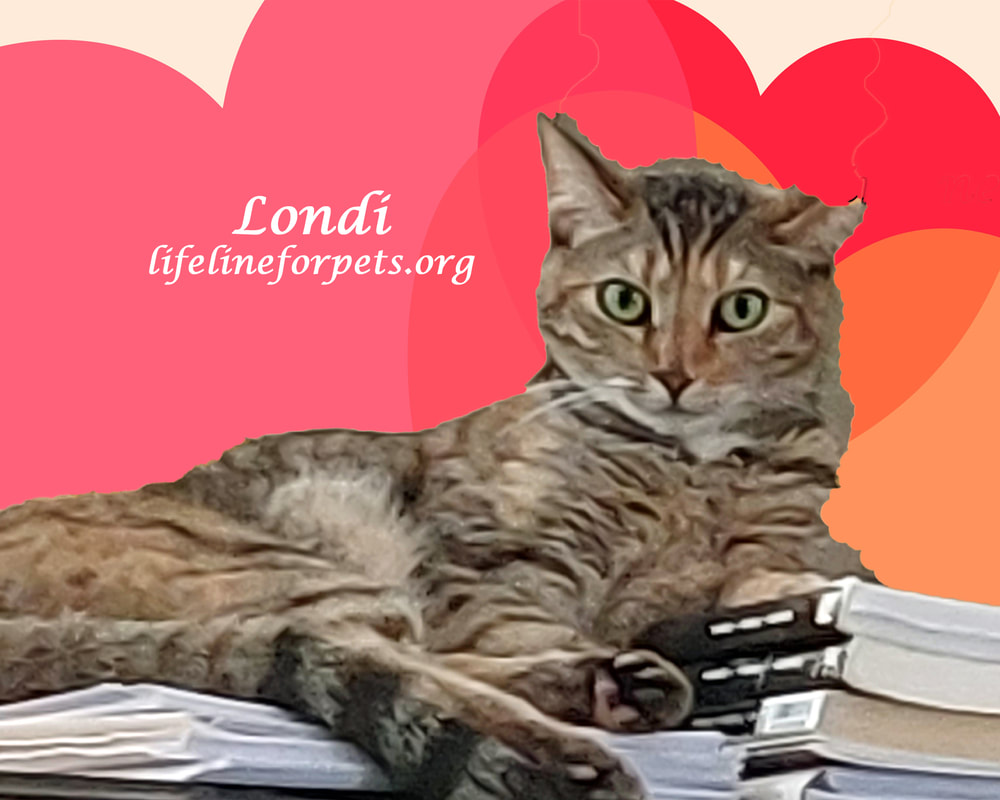
🌸 Meet Londi – The Quiet Beauty Waiting for Her Chance 🌸
Lovely Londi has been overlooked for far too long, but we believe the right person will see the quiet magic in her. She’s a gentle soul who prefers her independence and isn’t a lap cat—but that doesn’t mean she shouldn’t have a home of her own. (Two wonderful, long-term fosters had to return her due to drastic living changes, one of which was the Altadena fire.)
This beautiful girl finds joy in life’s simple pleasures: watching birds flutter outside the window, batting a toy around in peaceful play, stretching out luxuriously in a sunny spot, and savoring a tasty cat treat or two. She is healthy, low-maintenance, and would thrive as the only pet in a calm, patient home where she can simply be herself. Although she is healthy, she is on a prescription diet for bladder stones.
Because she is shy, almost feral, Londi will also need some patient carrier training so she can feel safe and secure for her occasional vet visits. With kindness and understanding, she’ll learn that the carrier means care and safety.
Londi may be always “vant to be alone”, but behind that is a cat who deserves love, safety, and someone who will appreciate her quiet companionship. We are hopeful in finding a loving family willing to give her all the time she needs to come out of her shell. If you are experienced with very skittish cats, have no other pets, and a heart open to a cat who marches to her own beat, Londi just might be the perfect match. We would also consider a long-term foster or a foster-to-adopt.
Lovely Londi has been overlooked for far too long, but we believe the right person will see the quiet magic in her. She’s a gentle soul who prefers her independence and isn’t a lap cat—but that doesn’t mean she shouldn’t have a home of her own. (Two wonderful, long-term fosters had to return her due to drastic living changes, one of which was the Altadena fire.)
This beautiful girl finds joy in life’s simple pleasures: watching birds flutter outside the window, batting a toy around in peaceful play, stretching out luxuriously in a sunny spot, and savoring a tasty cat treat or two. She is healthy, low-maintenance, and would thrive as the only pet in a calm, patient home where she can simply be herself. Although she is healthy, she is on a prescription diet for bladder stones.
Because she is shy, almost feral, Londi will also need some patient carrier training so she can feel safe and secure for her occasional vet visits. With kindness and understanding, she’ll learn that the carrier means care and safety.
Londi may be always “vant to be alone”, but behind that is a cat who deserves love, safety, and someone who will appreciate her quiet companionship. We are hopeful in finding a loving family willing to give her all the time she needs to come out of her shell. If you are experienced with very skittish cats, have no other pets, and a heart open to a cat who marches to her own beat, Londi just might be the perfect match. We would also consider a long-term foster or a foster-to-adopt.
Below: How to Help a Traumatized Cat Learn to Trust
Cats who have been through something frightening do not forget quickly. Whether the experience was an injury, an attack, prolonged neglect, or simply the chaos of life on the street, the body keeps a record. Trust does not return on a human schedule. It returns on the cat's.
Start with stillness. A traumatized cat needs to feel that her environment is predictable before she can begin to feel safe in it. Keep her in one quiet room at first with consistent food, water, and a litter box. Let her observe you from a distance before you attempt any interaction. Sit on the floor nearby and let her come to you rather than reaching for her.
Keep your movements slow and your voice low. Sudden movements and loud sounds re-trigger the nervous system. Talk to her in a calm, even tone even when you are not directly interacting with her. The sound of your voice, repeated over days, becomes something familiar and therefore safe.
Let her set the pace of physical contact. Extend a hand and let her sniff it before you touch her. If she pulls away, stop. If she leans in, that is your invitation. Short, gentle strokes along the cheeks and the top of the head are the least threatening places to start. Avoid direct eye contact at first, which many cats read as confrontational.
Do not interpret hiding as failure. A cat who retreats to a corner or under a bed is not rejecting you. She is managing her own stress. Leave her alone in those moments, keep the environment calm, and let her re-emerge when she is ready. The hiding period almost always shortens over time.
Routine is medicine. Feed at the same times each day. Keep the space consistent. Predictability is what a traumatized cat needs most. Every time something happens the way she expects it to, she is making a small deposit into the account of trust.
Cats who have been through something frightening do not forget quickly. Whether the experience was an injury, an attack, prolonged neglect, or simply the chaos of life on the street, the body keeps a record. Trust does not return on a human schedule. It returns on the cat's.
Start with stillness. A traumatized cat needs to feel that her environment is predictable before she can begin to feel safe in it. Keep her in one quiet room at first with consistent food, water, and a litter box. Let her observe you from a distance before you attempt any interaction. Sit on the floor nearby and let her come to you rather than reaching for her.
Keep your movements slow and your voice low. Sudden movements and loud sounds re-trigger the nervous system. Talk to her in a calm, even tone even when you are not directly interacting with her. The sound of your voice, repeated over days, becomes something familiar and therefore safe.
Let her set the pace of physical contact. Extend a hand and let her sniff it before you touch her. If she pulls away, stop. If she leans in, that is your invitation. Short, gentle strokes along the cheeks and the top of the head are the least threatening places to start. Avoid direct eye contact at first, which many cats read as confrontational.
Do not interpret hiding as failure. A cat who retreats to a corner or under a bed is not rejecting you. She is managing her own stress. Leave her alone in those moments, keep the environment calm, and let her re-emerge when she is ready. The hiding period almost always shortens over time.
Routine is medicine. Feed at the same times each day. Keep the space consistent. Predictability is what a traumatized cat needs most. Every time something happens the way she expects it to, she is making a small deposit into the account of trust.